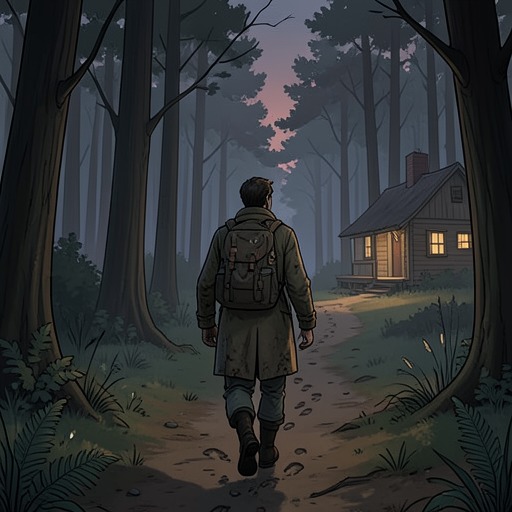
Ben Givens's planned suicide expedition
East of the MountainsBen Givens's planned suicide expedition is a quail hunt arranged to conceal his intention to die in the remote sage country. Driven by a terminal cancer diagnosis and his dread of the suffering he expects, Ben disguises the journey as an ordinary outing, even as the hunt begins to expose how sharply his plan conflicts with the life he has lived as a physician, husband, and father. The expedition is therefore both an attempted escape from anticipated pain and a test of the convictions and attachments he has tried to leave behind.
Background and Decision
Ben understands the force of his diagnosis as a physician as well as a patient. His cancer has spread from his colon to nearby lymph nodes and then to his liver; he believes there is no cure and imagines a decline marked by serious symptoms, dependence, and a prolonged nursing-home death. His medical knowledge, once a source of confidence in treating others, gives him a detailed forecast of what he fears awaits him. He sees no intervention that can stop the disease, and concludes that avoiding its anticipated suffering is preferable to enduring it.
That decision is not presented as a simple rejection of courage. Ben has seen enough pain to believe that it is indifferent to character or virtue, and he doubts that endurance alone makes suffering meaningful. He knows the counterargument: approaching death can intensify attention to ordinary beauty, deepen love, and make lesser troubles recede. But he questions whether such consolations, which he had previously spoken about as a doctor, reflect real knowledge of dying. In his view, extreme pain can overwhelm the arguments made on its behalf. His plan grows from this collision between professional understanding, personal fear, and uncertainty about what a prolonged death would mean.
A Hunt Concealing Its Purpose
To prevent his family from discovering the plan, Ben tells Renee and his grandson Chris that he is going over the mountains to hunt quail in willow canyons. He gives them an uncertain return date—Thursday, or perhaps Friday or Saturday if the hunting is good—so that they will not immediately search for him. He keeps his terminal diagnosis from them, partly because he fears it would burden a family still emerging from grief after Rachel Givens's death. Their dinner the evening before his departure thus serves two purposes: an apparently ordinary family visit and part of the cover for the expedition.
Ben extends the disguise into his household and equipment. He leaves familiar signs of an unfinished ordinary life, including a bird plucker, an open recipe box turned to quail on toast, a television recording, and a magazine Renee had given him. He packs enough clothing and toiletries to make the trip seem as long as he claims it will be. The details reveal how deliberately he has organized the appearance of a routine hunt, while his promise to go climbing with Chris at Silver Peak after he returns exposes the strain between his spoken future and the private plan he has made.
The practical arrangements also encompass his dogs. Ben imagines setting them free in the sage country before he dies, but worries that they could face hunger, hardship, and death. He hopes they might find another hunter, yet recognizes that leaving them would violate the responsibility he feels toward them. His concern is not incidental to the plan: even while preparing to disappear, he remains bound to the living creatures who depend on him.
Love, Memory, and the Intended Ending
The expedition carries a second, competing purpose through Ben's memory of a promise made with Rachel on a train from Mantua to Bressanone. They had imagined that their ashes would nourish intertwined roses, one red and one white. The idea had once seemed like a romantic wish; growing older, they had treated it with amusement without relinquishing it. Ben has preserved Rachel's ashes in the hope that the promise might still be fulfilled. Now he wonders whether dying alone in the sage country would make that future impossible, and imagines his own remains scattered rather than joined with hers.
His planned last meal belongs to the same stark reckoning. He expects to cook a quail over a fire, but sees that it would nourish only what consumes a dead body. The hunt, the dogs, and the roses all make the intended ending concrete in different ways: it would separate Ben from the animals in his care, frustrate a shared promise with Rachel, and reduce a final act of hunting to a gesture without the human relationships that have given his life shape.
The Hunt and the Plan's Contradiction
After killing birds during the hunt, Ben holds one and attends to its living warmth and patterned feathers. The encounter prompts him to question the circumstances he has chosen. An isolated death after killing small birds, he realizes, seems cruel and inadequate as the conclusion to a life spent as a doctor, husband, and father. He sees the hunt and the landscape as insufficient grounds for his final act, but also recognizes that suicide itself is at odds with his understanding of himself and the world. The conflict does not resolve into an immediate declaration that he has abandoned the plan; rather, the hunt makes its moral and personal contradictions newly visible.
The expedition continues to place that conflict alongside physical illness and fear. In a motel, sharp pain keeps Ben awake, and he uses marijuana given to him by a drifter in search of relief, while worrying that it may cloud his judgment. Later, at a fruit pickers' hut, he cannot tell whether the chill and nausea signal death or exhaustion, with the drug further obscuring his sense of his condition. He recognizes that beneath his outwardly stoic manner he has lived with persistent fear of death. The planned journey therefore does not deliver the certainty he sought: its stages bring relief, confusion, pain, and renewed confrontation with mortality, while the evidence of Ben's attachments continues to trouble the ending he intended.